
















Listen and choose the best answer. You can listen twice
1. The man studied English and _____ at the university.
2. He found his first job in Japan at a _____.
3. The man's cooking students wanted to ____.
4. Now, the man works at a Japanese restaurant and at a ____.
5. The man should be a good candidate for the job because he ____.
1. The man studied English and _____ at the university.
2. He found his first job in Japan at a _____.
3. The man's cooking students wanted to ____.
4. Now, the man works at a Japanese restaurant and at a ____.
5. The man should be a good candidate for the job because he ____.
Kiến thức: Nghe hiểu
1. Người đàn ông học Tiếng Anh và ________ ở đại học.
A. môn xã hội học
B. sinh học
C. tâm lý học
Thông tin: I’ve always been interested in teaching in a language program like this, and uh, I graduated with a degree in English and psychology eight years ago.
Tạm dịch: Tôi luôn quan tâm đến việc giảng dạy trong một chương trình ngôn ngữ như thế này và uh, tôi đã tốt nghiệp với bằng tiếng Anh và tâm lý học tám năm trước.
Chọn C
2. Anh ta tìm được công việc đầu tiên ở Nhật Bản tại ________.
A. một trường cao đẳng xã hội
B. một trường ngôn ngữ tư thục
C. một trường đại học
Thông tin:
Man: I landed my first job overseas in Japan.
Woman: Oh, wow. That’s pretty impressive. What did you do there? What kind of work?
Man: Well, I worked full time, um, for a private language school in Tokyo for the first two years, and then I found a job at a community college.
Tạm dịch:
Người đàn ông: Tôi đã có công việc đầu tiên ở nước ngoài tại Nhật Bản.
Người phụ nữ: Ồ, ồ. Điều đó khá ấn tượng. Bạn đã làm gì ở đó? Loại công việc nào?
Người đàn ông: Ồ, tôi đã làm việc toàn thời gian, ừm, cho một trường ngoại ngữ tư nhân ở Tokyo trong hai năm đầu tiên, và sau đó tôi tìm được việc làm tại một trường cao đẳng cộng đồng.
Chọn B
3. Học sinh nấu ăn của anh ta muốn _____.
A. sáng tạo một món ăn mới
B. mở một nhà hang
C. luyện tập Tiếng Anh với du khách
Thông tin:
Man: Well, um, many of my students wanted to become chefs in restaurants, or they wanted to start their own restaurants, uh, and in our area, there were many, uh, tourists tourist spots. A lot of tourists came to that particular area, and so with English, they would be able to communicate not only with suppliers, you know things that they need for restaurant’s food and so forth, but also with their customers, and so I taught them English and cooking at the same time.
Tạm dịch:
Người đàn ông: Ồ, ừm, nhiều sinh viên của tôi muốn trở thành đầu bếp trong các nhà hàng, hoặc họ muốn mở nhà hàng của riêng mình, uh, và trong khu vực của chúng tôi, có rất nhiều điểm du lịch dành cho khách du lịch. Rất nhiều khách du lịch đã đến khu vực cụ thể đó, và vì vậy với tiếng Anh, họ sẽ có thể giao tiếp không chỉ với các nhà cung cấp, bạn biết những điều họ cần đối với đồ ăn của nhà hàng, v.v., mà còn với khách hàng của họ, và vì vậy tôi đã dạy họ Tiếng Anh và nấu ăn cùng một lúc.
Chọn B
4. Hiện tại, người đàn ông làm việc tại một nhà hàng Nhật ở ________.
A. một trung tâm thể hình hiện đại
B. một trung tâm điều trị tâm lý
C. một trung tâm đào tạo ngôn ngữ
Thông tin:
Man: …. I want to return to teaching. I’ve also been working as a therapist at a treatment center for teenagers struggling with depression and other mental health disorders.
Tạm dịch:
Người đàn ông: …. Tôi muốn trở lại dạy học. Tôi cũng đang làm việc với tư cách là nhà trị liệu tại một trung tâm điều trị dành cho thanh thiếu niên đang đấu tranh với chứng trầm cảm và các rối loạn sức khỏe tâm thần khác.
Chọn B
5. Người đàn ông có thể là một ứng viên tầm năng cho công viêc bởi vì anh ta _________.
A. chuyên về lỗi ngữ pháp
B. có kinh nghiệm về tư vấn tâm lý
C. từng dạy học ở nhiều đất nước
Thông tin:
Woman: ..why don’t you tell me three reasons why you would be the best person for this job.
Man: Um, well, first of all, uh, I understand that different students have different learning styles, and for that reason, I have used iPads, video, music, cooking, drama, role plays, and games to reach every student. [ That’s good. ] And second, I have a background in academic and psychological counseling and advising [ Uh, huh ] . . . skills that are often needed, you know, in working with international students.
Woman: Yeah, that could be really useful.
…
Woman: Good. So, what would you say would be a third reason?
Man: And finally, I speak four different languages . . . . I speak Spanish, Portuguese, and Japanese at an advanced level. [ At an advanced level? Wow. ] And I also speak Arabic at a high-intermediate level.
Chọn B
Transcripts:
Woman: Hi. Thanks for coming to the interview today. It’s nice to meet you.
Man: Well, thank you.
Woman: To begin with, why don’t you tell us a little about yourself?
Man: Okay. Um, yeah. I’ve always been interested in teaching in a language program like this, and uh, I graduated with a degree in English and psychology eight years ago, [ Oh, really, both? ]. Yeah, and uh then I landed my first job overseas in Japan.
Woman: Oh, wow. That’s pretty impressive. What did you do there? What kind of work?
Man: Well, I worked full time, um, for a private language school in Tokyo for the first two years, and then I found a job at a community college.
Woman: Oh really? So, exactly what did you do in your work there then?
Man: Well, I taught English and, uh, culinary arts.
Woman: You taught cooking classes?
Man: Well, well, I know it sounds like an unusual combination, but I completed a program in culinary arts before I got my, uh, English and psychology degrees.
Woman: Oh, Wow. You’ve done a lot, haven’t you? [ Yeah. ] So, what exactly, um, how did you teach and what exactly did you do?
Man: Well, um, many of my students wanted to become chefs in restaurants, or they wanted to start their own restaurants, uh, and in our area, there were many, uh, tourists tourist spots. A lot of tourists came to that particular area, and so with English, they would be able to communicate not only with suppliers, you know things that they need for restaurant’s food and so forth, but also with their customers, and so I taught them English and cooking at the same time.
Woman: Wow. That’s, that’s pretty impressive. That’s interesting. [ . . . and tasty.] Oh, I bet. So, why did you return to the United States? How long have you been back?
Man: I’ve been back for, uh, probably about a year now.
Woman: Okay, so what brought you back then?
Man: Well, one of my former students opened a sushi restaurant, uh, in town, and he asked me to work with him.
Woman: Really? What’s the name of the restaurant?
Man: Well, it’s called Flying Sushi. Have you ever heard of it?
Woman: Yes, I’ve been there. Their food is fabulous; it’s top-notch. It’s really hard just to get a reservation there.
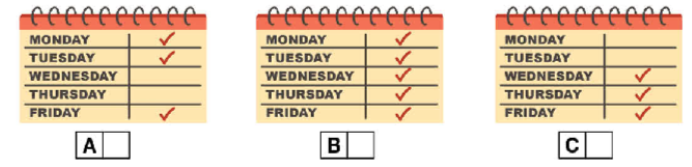
Man: I know, and uh, well, I work there two weeknights, and uh, and then . . .
Woman: So, two nights a week you’re working there still?
Man: Right, right, but then, but . . . I want to return to teaching. I’ve also been working as a therapist at a treatment center for teenagers struggling with depression and other mental health disorders.
Woman: Oh, wow, that would be a really interesting job.
Man: It is, it is.
Woman: Wow. You have such a wide range of experience. Uh, you know, to be honest, we have fifteen people who are applying for this position. You’ve got quite a background, but why don’t you tell me three reasons why you would be the best person for this job.
Man: Um, well, first of all, uh, I understand that different students have different learning styles, and for that reason, I have used iPads, video, music, cooking, drama, role plays, and games to reach every student. [ That’s good. ] And second, I have a background in academic and psychological counseling and advising [ Uh, huh ] . . . skills that are often needed, you know, in working with international students.
Woman: Yeah, that could be really useful.
Man: Yeah, so you know, many of them struggle with, uh, emotional turmoil, you know, home sickness . . . .
Woman: Yeah, coming to a new place . . .
Man: Right, so making the transition can be very overwhelming, and uh . . .
Woman: Good. So, what would you say would be a third reason?
Man: And finally, I speak four different languages . . . .
Woman: Four? Wow! What languages do you speak?
Man: Well, I speak Spanish, Portuguese, and Japanese at an advanced level. [ At an advanced level? Wow. ] And I also speak Arabic at a high-intermediate level.
Woman: That’s very, very impressive. You do have an impressive resume.
Man: Thank you.
Woman: Uh, what we’re doing . . . we’re going to have two rounds of interviews, and we will contact you on Friday and let you know whether or not you’ll be coming back for the second round of interviews.
Man: Okay.
Woman: It’s been really nice meeting you, and thank you for your time.








Danh sách bình luận