












1. Read the text and decide whether the following statements are true (T) or false (F).
(Đọc văn bản và quyết định xem các câu sau là đúng (T) hay sai (F).)
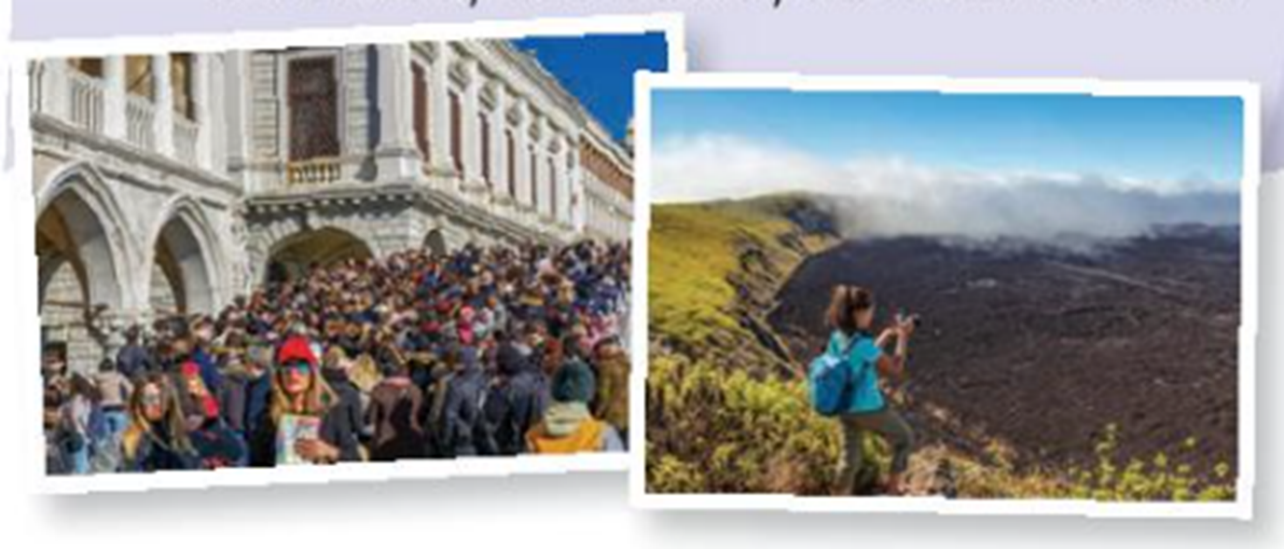
The number of tourists has increased over the years. In 1950, there were only 25 million international tourist arrivals. In 2020, it was estimated that 1.4 billion tourists travelled every year. While tourism is very important to the economy, there is also a price to pay especially in terms of the environment. In fact, the negative impact of tourism on the local environment is huge. Sometimes, the impact is direct, such as when tourists litter the streets or use up natural resources of the local areas such as clean water or energy. Other times, the impact is less direct but still large. When tourists travel for instance, they often travel by planes or vehicles that use a lot of fuel. This damages the environment as well. In either way, tourists are knowingly or not knowingly damaging the environment as they travel. However, it is possible to reduce such negative impact on the environment by traveling more responsibly and in a more eco-friendly way.
|
|
T |
F |
|
1. A suitable tittle for the text would be 'Negative impact of tourism on the economy.’ |
|
|
|
2. In 2020, it was estimated that more than 1 billion people traveled each year. |
|
|
|
3. Tourism is not important for the economy. |
|
|
|
4. Tourists can damage the environment directly or indirectly. |
|
|
|
5. By travelling by plane, tourists can reduce the negative impact of their travel on the environment. |
|
|
|
6. Indirect damage to the environment is not much. |
|
|
|
7. Tourists may be not aware of the damage they are causing to the environment when they travel. |
|
|
|
8. We cannot reduce the negative impact of tourism on the environment. |
|
|
Tạm dịch:
Lượng khách du lịch tăng dần qua các năm. Năm 1950, chỉ có 25 triệu lượt khách du lịch quốc tế. Vào năm 2020, ước tính có 1,4 tỷ khách du lịch đi du lịch mỗi năm. Trong khi du lịch rất quan trọng đối với nền kinh tế, thì cũng có một cái giá phải trả, đặc biệt là về mặt môi trường. Trên thực tế, tác động tiêu cực của du lịch đối với môi trường địa phương là rất lớn. Đôi khi, tác động trực tiếp, chẳng hạn như khi khách du lịch xả rác trên đường phố hoặc sử dụng tài nguyên thiên nhiên của khu vực địa phương như nước sạch hoặc năng lượng. Những lần khác, tác động ít trực tiếp hơn nhưng vẫn lớn. Ví dụ, khi khách du lịch đi du lịch, họ thường di chuyển bằng máy bay hoặc các phương tiện sử dụng nhiều nhiên liệu. Điều này cũng làm hỏng môi trường. Bằng cả hai cách, khách du lịch đang cố ý hoặc không cố ý làm tổn hại đến môi trường khi họ đi du lịch. Tuy nhiên, có thể giảm tác động tiêu cực đó lên môi trường bằng cách đi du lịch có trách nhiệm hơn và thân thiện hơn với môi trường.
| 1. F | 2. T | 3. F | 4. T |
| 5. F | 6. F | 7. T | 8. F |
1. F
A suitable tittle for the text would be 'Negative impact of tourism on the economy.’
(Tiêu đề phù hợp cho văn bản sẽ là 'Tác động tiêu cực của du lịch đối với nền kinh tế.')
Thông tin: While tourism is very important to the economy, there is also a price to pay especially in terms of the environment. In fact, the negative impact of tourism on the local environment is huge. In fact, the negative impact of tourism on the local environment is huge.
(Trong khi du lịch rất quan trọng đối với nền kinh tế, thì cũng có một cái giá phải trả, đặc biệt là về mặt môi trường. Trên thực tế, tác động tiêu cực của du lịch đối với môi trường địa phương là rất lớn.)
=> Vì vậy, văn bản chủ yếu đề cập đến tác động tiêu cực của du lịch đến môi trường, không phải là kinh tế.
2. T
In 2020, it was estimated that more than 1 billion people traveled each year.
(Vào năm 2020, ước tính có hơn 1 tỷ người đi du lịch mỗi năm.)
Thông tin: In 2020, it was estimated that 1.4 billion tourists travelled every year.
(Vào năm 2020, ước tính có 1,4 tỷ khách du lịch đi du lịch mỗi năm.)
3. F
Tourism is not important for the economy.
(Du lịch không quan trọng đối với nền kinh tế.)
Thông tin: While tourism is very important to the economy,…
(Trong khi du lịch rất quan trọng đối với nền kinh tế,….)
4. T
Tourists can damage the environment directly or indirectly.
(Khách du lịch có thể hủy hoại môi trường trực tiếp hoặc gián tiếp.)
Thông tin: Sometimes, the impact is direct, such as when tourists litter the streets…. Other times, the impact is less direct but still large...)
(Đôi khi, tác động trực tiếp, chẳng hạn như khi khách du lịch xả rác trên đường phố…Những lần khác, tác động ít trực tiếp hơn nhưng vẫn lớn…)
5. F
By travelling by plane, tourists can reduce the negative impact of their travel on the environment.
(Bằng cách đi du lịch bằng máy bay, khách du lịch có thể giảm tác động tiêu cực của chuyến du lịch đến môi trường.)
Thông tin: When tourists travel for instance, they often travel by planes or vehicles that use a lot of fuel. This damages the environment as well.
(Ví dụ, khi khách du lịch đi du lịch, họ thường di chuyển bằng máy bay hoặc các phương tiện sử dụng nhiều nhiên liệu. Điều này cũng làm hỏng môi trường.)
6. F
Indirect damage to the environment is not much.
(Thiệt hại gián tiếp đối với môi trường không nhiều.)
Thông tin: Other times, the impact is less direct but still large.
(Những lần khác, tác động ít trực tiếp hơn nhưng vẫn lớn.)
7. T
Tourists may be not aware of the damage they are causing to the environment when they travel.
(Khách du lịch có thể không nhận thức được những thiệt hại mà họ đang gây ra đối với môi trường khi họ đi du lịch.)
Thông tin: In either way, tourists are knowingly or not knowingly damaging the environment as they travel.
(Bằng cả hai cách, khách du lịch đang cố ý hoặc không cố ý làm tổn hại đến môi trường khi họ đi du lịch.)
8. F
We cannot reduce the negative impact of tourism on the environment.
(Chúng ta không thể giảm tác động tiêu cực của du lịch đối với môi trường.)
Thông tin: However, it is possible to reduce such negative impact on the environment by traveling more responsibly and in a more eco-friendly way.
(Tuy nhiên, có thể giảm tác động tiêu cực đó lên môi trường bằng cách đi du lịch có trách nhiệm hơn và thân thiện hơn với môi trường.)







Danh sách bình luận