Bài 9 :
4.1 Comparison
(So sánh)
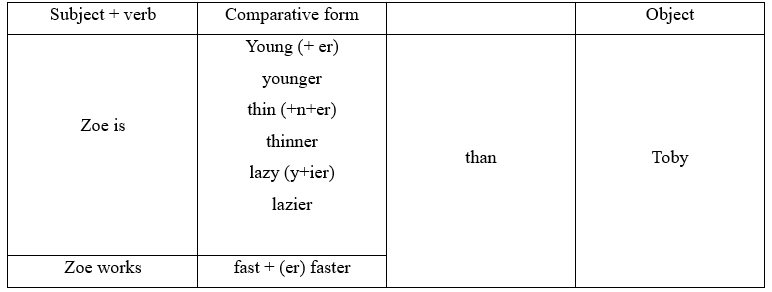
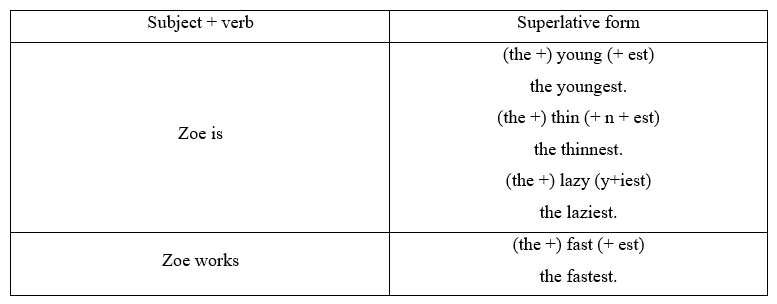
The comparative and superlative forms of adjectives and adverbs with one syllable are formed by adding -er or -est. The same is true of adjectives with two syllables ending in -y.
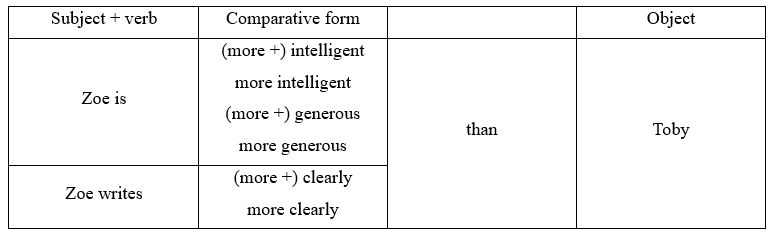
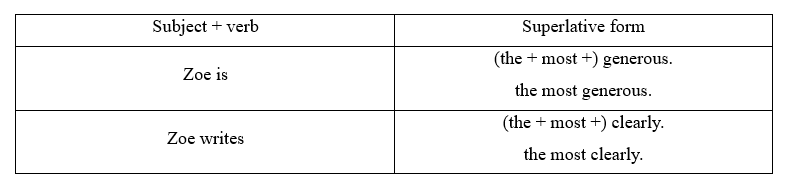
The comparative and superlative forms of adjectives and adverbs with two syllables or more are formed by putting more or the most before the adjective or adverb.
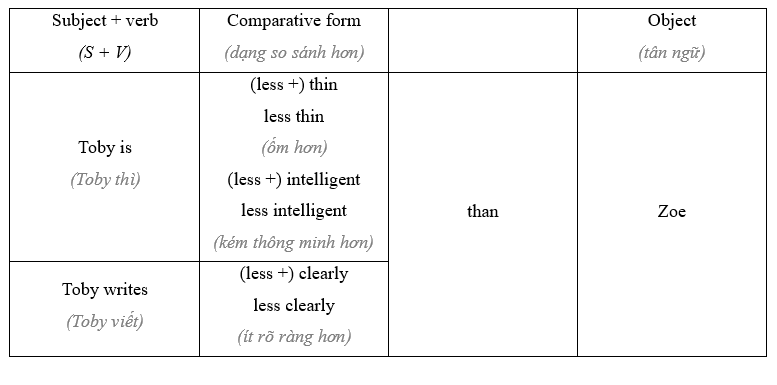
We can also form comparatives and superlatives of adjectives and adverbs with less and the least.
Less is the opposite of more. Least is the opposite of most.
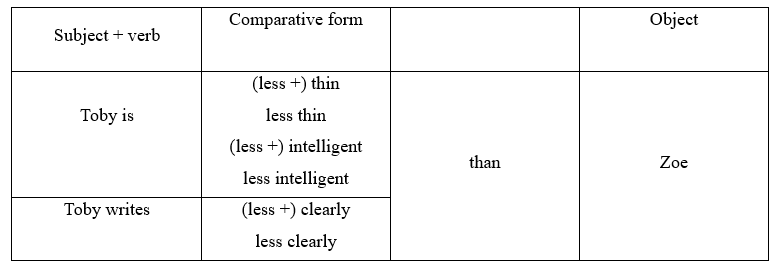
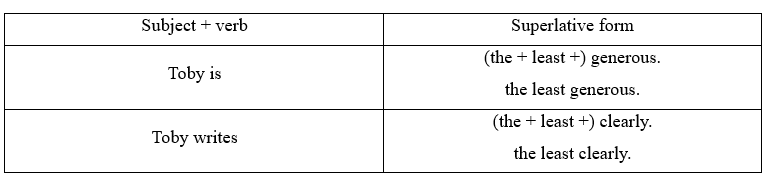
We can use less and least with uncountable nouns.
I've got less spare time than you.
Who's got the least money?
We often use of after superlative adjectives.
Jamie is the smallest of the three brothers.
But we use in, not of, with a group or place (e.g. the world, the class, London).
the best café in Oxford
the most intelligent boy in the class
the longest river in Africa
We can make comparisons with clauses as well as with nouns.
Gemma is more intelligent than you think.
The weather is hotter than it was last week.
We often use a superlative with the present perfect and ever.
Alex has got the biggest dog I've ever seen!
We can compare two things, using (not) as... as.
Julie is as tall as Mike. (= They are the same height.)
Leah isn't as tall as Joe. (= Joe is taller.)
We use double comparatives to emphasise that something is changing.
The weather is getting hotter and hotter.
We use the... the and comparatives to say that one thing changes with another.
The more carefully you check your work, the fewer mistakes you'll make.
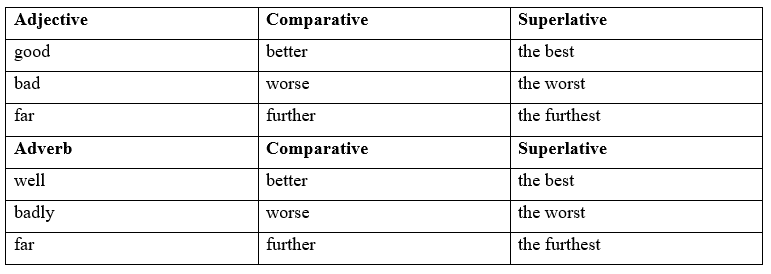
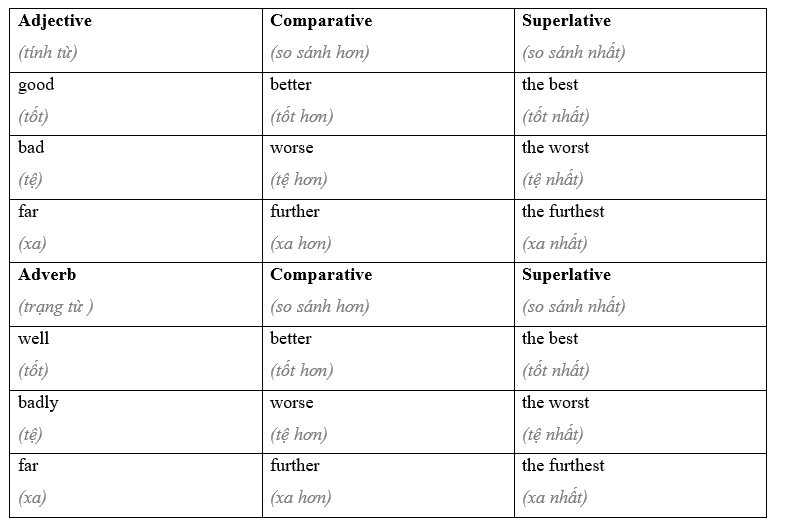
Remember irregular comparative and superlative forms.
Tạm dịch
Dạng so sánh hơn và so sánh nhất của tính từ và trạng từ có một âm tiết được thành lập bằng cách thêm -er hoặc -est. Điều này cũng đúng với tính từ có hai âm tiết kết thúc bằng -y.
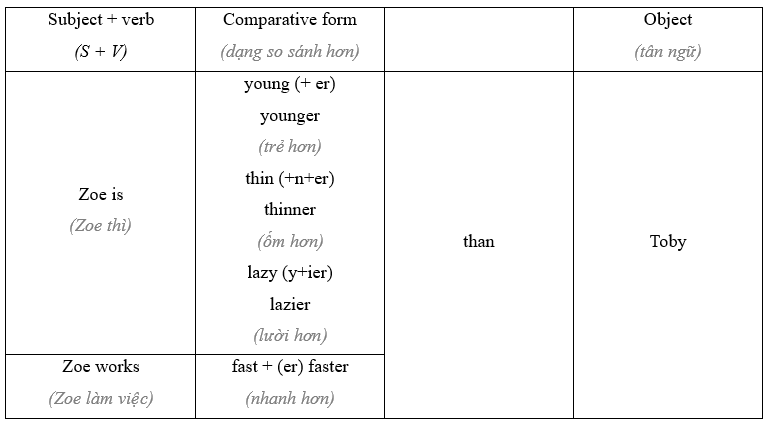
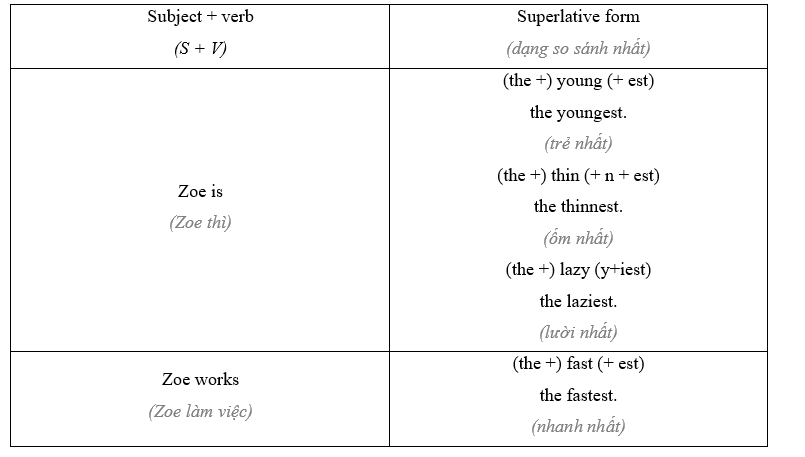
Dạng so sánh hơn và so sánh nhất của tính từ và trạng từ có hai âm tiết trở lên được hình thành bằng cách đặt more hoặc the most trước tính từ hoặc trạng từ.
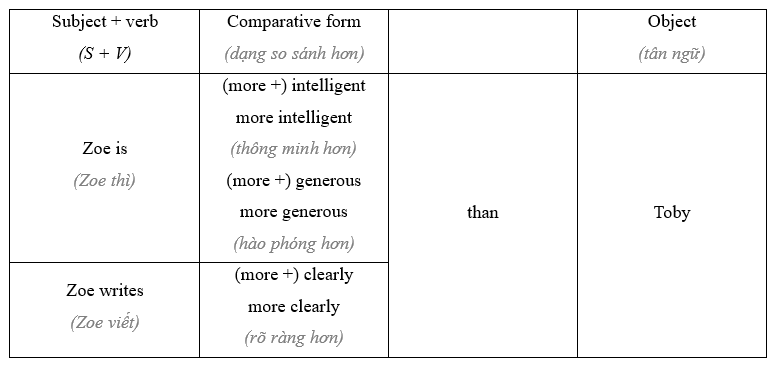
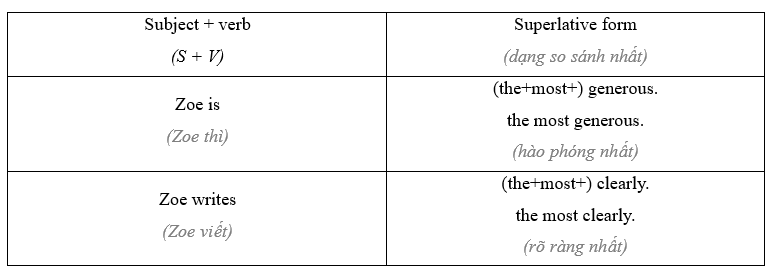
Chúng ta cũng có thể hình thành dạng so sánh hơn và so sánh nhất của tính từ và trạng từ với less và the least.
Ít hơn “less” là ngược lại với nhiều hơn “more”. Ít nhất “the least” là trái nghĩa của hầu hết “the most”.
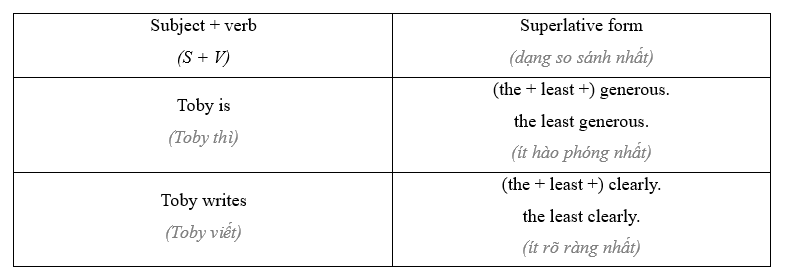
Chúng ta có thể dùng less và least với danh từ không đếm được.
Tôi có ít thời gian rảnh rỗi hơn bạn.
Ai là người có ít tiền nhất?
Chúng ta thường dùng of sau tính từ so sánh nhất.
Jamie là người nhỏ nhất trong ba anh em.
Nhưng chúng ta dùng in, not of, với một nhóm hoặc địa điểm (ví dụ: the world, the class, London).
quán cà phê tốt nhất ở Oxford
cậu bé thông minh nhất trong lớp
con sông dài nhất ở châu Phi
Chúng ta có thể so sánh với mệnh đề cũng như với danh từ.
Gemma thông minh hơn bạn nghĩ.
Thời tiết nóng hơn so với tuần trước.
Chúng ta thường dùng so sánh nhất với thì hiện tại hoàn thành và từ trước đến nay.
Alex có con chó lớn nhất mà tôi từng thấy!
Chúng ta có thể so sánh hai thứ bằng cách sử dụng (not) as... as.
Julie cao bằng Mike. (= Họ có cùng chiều cao.)
Leah không cao bằng Joe. (= Joe cao hơn.)
Chúng tôi sử dụng so sánh kép để nhấn mạnh rằng một cái gì đó đang thay đổi.
Thời tiết ngày càng nóng hơn.
Chúng ta sử dụng the... the và so sánh hơn để nói rằng một thứ thay đổi theo một thứ khác.
Bạn càng kiểm tra công việc của mình cẩn thận bao nhiêu thì bạn càng mắc ít lỗi bấy nhiêu.
Ghi nhớ các dạng so sánh hơn và so sánh nhất bất quy tắc.
1 Correct the mistakes in the sentences.
(Sửa lỗi sai trong câu.)
1 I'm busyer today than I was yesterday.
2 He's the shortest boy of the class.
3 Kate's more short than Alice.
4 You're not as clever than me.
5 Today is longest day of the year.



















Danh sách bình luận