












2. Choose the correct answer A, B, or C to complete each sentence.
(Chọn đáp án đúng A, B, hoặc C để hoàn thành mỗi câu.)
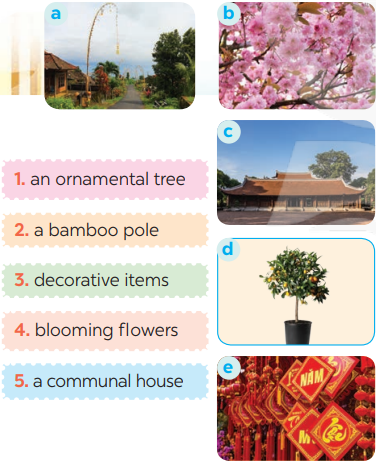
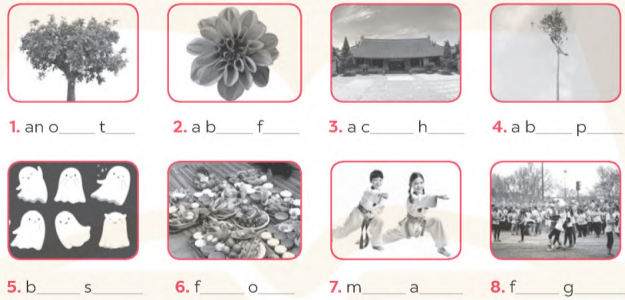
1. In many cultures, a _____ represents youth, beauty, and pleasure.
A. blooming flower
B. communal house
C. bamboo pole
2. _____ such as kumquat trees, peach blossoms, and apricot flowers are popular at Tet.
A. Blooming flower
B. Vegetables
C. Ornamental trees
3. Traditionally, the _____ in a village is a place for villagers to meet or worship.
A. festival
B. market
C. communal house
4. Every year, the Bulgarians hold the Surva Festival to chase away _____.
A. bad spirits
B. festival goers
C. martial artists
5. In many Vietnamese villages, people put up a _____ in the yard of the communal house to welcome Tet.
A. fight
B. barrier
C. bamboo pole
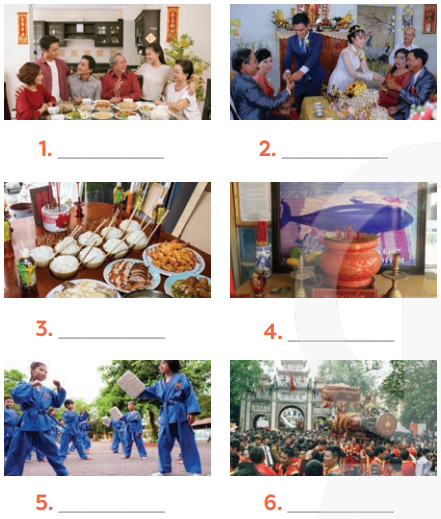
6. During Tet, the Kinh often prepare traditional _____ such as banh chung and boiled chicken to worship their ancestors.
A. decorative items
B. food offerings
C. spirits
7. Last year, thousands of festival _____ participated in the Lim Festival in Tien Du District.
A. comers
B. goers
C. movers
8. Learning _____ can help build physical strength and improve confidence.
A. martial arts
B. physics
C. chemistry

1. A
In many cultures, a blooming flowers represents youth, beauty, and pleasure.
(Trong nhiều nền văn hóa, hoa nở tượng trưng cho tuổi trẻ, sắc đẹp và niềm vui.)
Giải thích:
A. blooming flower (np): hoa nở
B. communal house (np): đình
C. bamboo pole (np): cọc tre
2. C
Ornamental trees such as kumquat trees, peach blossoms, and apricot flowers are popular at Tet.
(Các loại cây cảnh như cây quất, hoa đào, hoa mai được ưa chuộng trong dịp Tết.)
Giải thích:
A. Blooming flower (np): hoa nở
B. Vegetables (n): rau
C. Ornamental trees (np): cây cảnh
3. C
Traditionally, the communal house in a village is a place for villagers to meet or worship.
(Theo truyền thống, đình làng là nơi để dân làng hội họp, thờ cúng.)
Giải thích:
A. festival (n): lễ hội
B. market (n): chợ
C. communal house (np): đình làng
4. A
Every year, the Bulgarians hold the Surva Festival to chase away bad spirits.
(Hàng năm, người Bulgaria tổ chức Lễ hội Surva để xua đuổi tà ma.)
Giải thích:
A. bad spirits (np): tà ma
B. festival goers (np): người đi lễ hội
C. martial artists (np): võ sĩ
5. C
In many Vietnamese villages, people put up a bamboo pole in the yard of the communal house to welcome Tet.
(Ở nhiều làng quê Việt Nam, người ta dựng cọc tre trước sân đình để đón Tết.)
Giải thích:
A. fight (n): trận đánh
B. barrier (n): rào cản
C. bamboo pole (np): cọc tre
6. B
During Tet, the Kinh often prepare traditional food offerings such as banh chung and boiled chicken to worship their ancestors.
(Trong dịp Tết, người Kinh thường chuẩn bị các món ăn truyền thống như bánh chưng, gà luộc để cúng tổ tiên.)
Giải thích:
A. decorative items (np): đồ trang trí
B. food offerings (np): cúng dường đồ ăn
C. spirits (n): tinh thần
7. B
Last year, thousands of festival goers participated in the Lim Festival in Tien Du District.
(Năm ngoái, hàng nghìn người tham gia lễ hội đã tham gia Lễ hội Lim ở huyện Tiên Du.)
Giải thích:
A. comers (n): người đến
B. goers (n): người đi
C. movers (n): người vận chuyển
8. A
Learning martial arts can help build physical strength and improve confidence.
(Học võ có thể giúp rèn luyện sức mạnh thể chất và nâng cao sự tự tin.)
Giải thích:
A. martial arts (n): võ thuật
B. physics (n): vật lý
C. chemistry (n): hóa học






Danh sách bình luận