
















2. a) Read the text. Choose the option (A, B, C or D) that best fits each gap (1-5).
(Đọc bài khoá. Chọn đáp án (A, B, C hoặc D) phù hợp với mỗi chỗ trống (1-5).)
From Cave Walls to Social Media Walls
In today's world, we have different kinds of media available to us at all times, but did you know that the history of media actually goes back millennia?
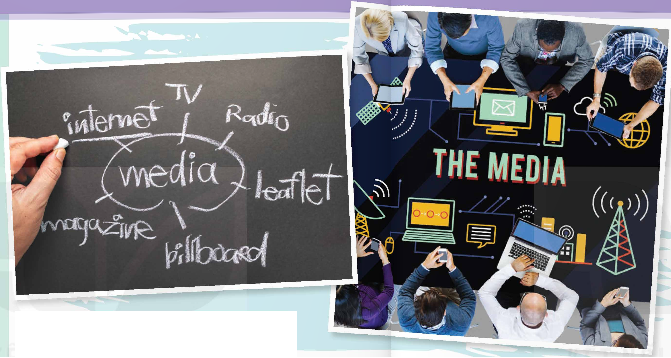
The word ‘media’ refers to the different ways in which people transmit information. By this definition, we can say with confidence that human beings created the first type of media around 64,000 years ago when we first began painting simplistic 1) _____ on the walls of caves. Since then, the more we have evolved, the more advanced our media have become.
According to experts, it was sometime around 3,400 BC when human beings first began utilising written language as a means of communication. For 2) _____, apart from verbal communication, people had to write everything manually until the mid-1440s. It was Johannes Gutenberg 3) _____ revolutionised media when he created an invention called the printing press. This marked the beginning of what we now call 'mass media: Gutenberg's innovative invention made print media like books, newspapers and magazines at a large scale and 4) _____ information with a wider audience than ever before.
Several hundred years after the invention of the printing press, during the 19th century, we created cameras and later, the radio. The invention of the radio began the age of broadcast media, and the development of television swiftly followed it. This allowed 5) _____ people to watch fascinating movies. programmes and documentaries. all of which remain popular today.
In the 2000s, we saw the rise of digital media. Now, we visit web pages, listen to podcasts, stream music and communicate on social media using our smartphones. We even use QR codes to share information instantly. We have come a long way, and so have the ways we communicate!
1. A. letters B. symbols C. cartoons D. words
2. A. durations B. periods C. times D. generations
3. A. what B. who C. which D. whose
4. A. share B. delay C. transfer D. divide
5. A. much B. every C. another D. many
• millennia (n): thiên niên kỷ
• transmit (v): chuyển giao
• evolve (v): tiến hoá
• utilise (v): sử dụng
• revolutionise (v): cách mạng hoá
• mass media (v): truyền thông đại chúng
• innovative (adj): có tính chất đổi mới
• Read the text without looking at the options to get a general understanding of the text.
(Đọc bài khoá mà không nhìn các lựa chọn để có thể hiểu một cách khái quát về bài khoá.)
• Pay attention to the words before and alter each gap, and try to predict the possible answers.
(Chú ý đến những từ trước và sau chỗ trống, và cố gắng đoán những đáp án có thể xảy ra.)
• Look at the options and decide the best choice to go in each gap.
(Nhìn vào các lựa chọn và quyết định đáp án đúng của mỗi chỗ trống.)

1. B
A. letters (n): chữ cái
B. symbols (n): biểu tượng
C. cartoons (n): hoạt hình
D. words (n): từ ngữ
Thông tin: By this definition, we can say with confidence that human beings created the first type of media around 64,000 years ago when we first began painting simplistic symbols on the walls of caves.
(Theo định nghĩa này, chúng ta có thể tự tin nói rằng con người đã tạo ra loại phương tiện truyền thông đầu tiên vào khoảng 64.000 năm trước khi chúng ta bắt đầu vẽ những biểu tượng đơn giản trên tường hang động.)
2. D
A. durations (n): khoảng thời gian
B. periods (n): thời kỳ, giai đoạn
C. times (n): thời gian
D. generations (n): thế hệ
Thông tin: For generations, apart from verbal communication, people had to write everything manually until the mid-1440s.
(Trong nhiều thế hệ, ngoài giao tiếp bằng lời nói, mọi người phải viết mọi thứ bằng tay cho đến giữa những năm 1440.)
3. B
A. what: cái gì
B. who: ai
C. which: cái nào
D. whose: của ai
Thông tin: It was Johannes Gutenberg which revolutionised media when he created an invention called the printing press.
(Chính Johannes Gutenberg đã cách mạng hóa phương tiện truyền thông khi ông tạo ra một phát minh gọi là máy in.)
4. A
A. share (v): chia sẻ m
B. delay (v): trì hoãn
C. transfer (v): dời, chuyển
D. divide (v): chia
Thông tin: This marked the beginning of what we now call “mass media”: Gutenberg's innovative invention made print media like books, newspapers and magazines at a large scale and much information with a wider audience than ever before.
(Điều này đánh dấu sự khởi đầu của cái mà ngày nay chúng ta gọi là “phương tiện truyền thông đại chúng”: Phát minh sáng tạo của Gutenberg đã tạo ra các phương tiện truyền thông in ấn như sách, báo và tạp chí ở quy mô lớn và có nhiều thông tin với lượng khán giả rộng hơn bao giờ hết.)
5. D
A. much: nhiều
B. every: mỗi
C. another: cái khác
D. many: nhiều
Thông tin: This allowed many people to watch fascinating movies. programmes and documentaries, all of which remain popular today.
(Điều này cho phép nhiều người xem những bộ phim hấp dẫn. các chương trình và phim tài liệu, tất cả đều vẫn còn phổ biến cho đến ngày nay.)
From Cave Walls to Social Media Walls
In today's world, we have different kinds of media available to us at all times, but did you know that the history of media actually goes back millennia?
The word ‘media’ refers to the different ways in which people transmit information. By this definition, we can say with confidence that human beings created the first type of media around 64,000 years ago when we first began painting simplistic symbols on the walls of caves. Since then, the more we have evolved, the more advanced our media have become.
According to experts, it was sometime around 3,400 BC when human beings first began utilising written language as a means of communication. For generations, apart from verbal communication, people had to write everything manually until the mid-1440s. It was Johannes Gutenberg which revolutionised media when he created an invention called the printing press. This marked the beginning of what we now call “mass media”: Gutenberg's innovative invention made print media like books, newspapers and magazines at a large scale and much information with a wider audience than ever before.
Several hundred years after the invention of the printing press, during the 19th century, we created cameras and later, the radio. The invention of the radio began the age of broadcast media, and the development of television swiftly followed it. This allowed many people to watch fascinating movies, programmes and documentaries, all of which remain popular today.
In the 2000s, we saw the rise of digital media. Now, we visit web pages, listen to podcasts, stream music and communicate on social media using our smartphones. We even use QR codes to share information instantly. We have come a long way, and so have the ways we communicate!
(Từ tường hang đến tường trên mạng xã hội
Trong thế giới ngày nay, chúng ta luôn có sẵn nhiều loại phương tiện truyền thông khác nhau, nhưng bạn có biết rằng lịch sử của phương tiện truyền thông thực sự đã có từ hàng thiên niên kỷ trước?
Từ 'phương tiện truyền thông' đề cập đến những cách khác nhau mà mọi người truyền tải thông tin. Theo định nghĩa này, chúng ta có thể tự tin nói rằng con người đã tạo ra loại phương tiện truyền thông đầu tiên vào khoảng 64.000 năm trước khi chúng ta bắt đầu vẽ những biểu tượng đơn giản trên tường hang động. Kể từ đó, chúng ta càng phát triển thì phương tiện truyền thông của chúng ta càng trở nên tiên tiến hơn.
Theo các chuyên gia, vào khoảng năm 3.400 trước Công nguyên, con người lần đầu tiên bắt đầu sử dụng ngôn ngữ viết làm phương tiện giao tiếp. Trong nhiều thế hệ, ngoài giao tiếp bằng lời nói, mọi người phải viết mọi thứ bằng tay cho đến giữa những năm 1440. Chính Johannes Gutenberg đã cách mạng hóa phương tiện truyền thông khi ông tạo ra một phát minh gọi là máy in. Điều này đánh dấu sự khởi đầu của cái mà ngày nay chúng ta gọi là “phương tiện truyền thông đại chúng”: Phát minh sáng tạo của Gutenberg đã tạo ra các phương tiện truyền thông in ấn như sách, báo và tạp chí ở quy mô lớn và có nhiều thông tin với lượng khán giả rộng hơn bao giờ hết.
Vài trăm năm sau khi phát minh ra máy in, trong thế kỷ 19, chúng ta đã tạo ra máy ảnh và sau đó là radio. Việc phát minh ra radio đã bắt đầu thời đại của các phương tiện truyền thông phát sóng, và sự phát triển của truyền hình cũng nhanh chóng theo sau nó. Điều này cho phép nhiều người xem những bộ phim hấp dẫn. các chương trình và phim tài liệu, tất cả đều vẫn còn phổ biến cho đến ngày nay.
Vào những năm 2000, chúng ta chứng kiến sự trỗi dậy của phương tiện truyền thông kỹ thuật số. Giờ đây, chúng ta truy cập các trang web, nghe podcast, phát nhạc trực tuyến và giao tiếp trên mạng xã hội bằng điện thoại thông minh của mình. Chúng tôi thậm chí còn sử dụng mã QR để chia sẻ thông tin ngay lập tức. Chúng ta đã tiến rất xa, và cách chúng ta giao tiếp cũng vậy!)






Danh sách bình luận